
In January 1993, American diplomat-scholar James W. Spain returned to the North-West Frontier accompanied by his journalist son, embarking on an overland expedition through the heart of Waziristan. Setting out from the historic Commissioner's House in Kohat—built a century earlier by Sir Louis Cavagnari on the architectural model of Thomas Jefferson's Monticello—their convoy was escorted by North Waziristan Scouts and cartridge-belted Khassadars through Hangu and Thal toward Miranshah.
Ascending steadily into the highlands, the road climbed another 3,500 feet to Razmak (elevation 6,500 feet), where a thick blanket of winter snow covered the villages and mountain crags. In this austere landscape devoid of timber, villagers relied on smokeless charcoal to keep warm, preserving their homes from detection by rival clans in the harsh winter months.
At the Officers' Mess of the Shawal Rifles, Spain observed the peaceful transition of the once-feared cantonment. Reoccupied under Prime Minister Zulfikar Ali Bhutto in the 1970s, Razmak was now staffed by Scout units dedicated to keeping the peace, protecting trade corridors, and supporting local schools and a hospital accessible to tribesmen.
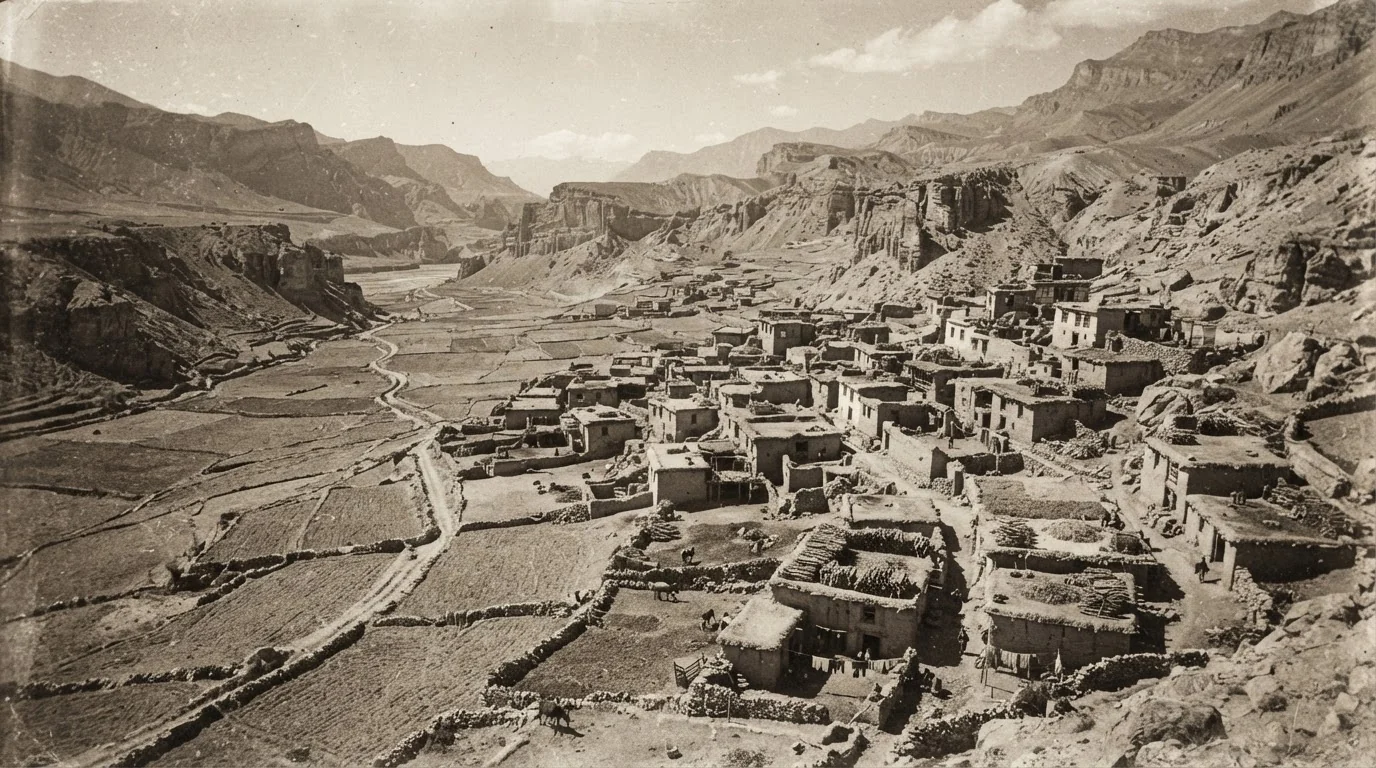
Travelling south toward South Waziristan through heavy snowbanks, the convoy paused across a deep ravine from Kaniguram, the historic ancestral seat of the Burki tribe and Mahsud craftspeople. Spain marveled at the multi-storey stone houses and fortified defensive towers clustered tightly along the cliff face, reflecting centuries of indigenous architectural ingenuity and martial preparedness.
Descending to Wana for a traditional feast hosted by the Assistant Political Agent, the travellers reflected on the enduring character of Waziristan: no longer as bloody and dark as in colonial lore, but retaining every ounce of its wild majesty and proud independence.
Sources
- 1.Pathans of the Latter Day — James W. Spain, Chapter 7: Waziristan: Less Dark and Bloody