
Following World War I, the British Empire revolutionized its frontier strategy under what became known as the "Razmak Policy." Rather than launching temporary punitive expeditions from the plains, the military established a massive permanent cantonment in the very heart of Mahsud country at Razmak. Housing up to 15,000 British and Indian troops behind triple tiers of barbed wire, floodlit perimeters, and artillery batteries, Razmak stood as an impenetrable imperial outpost connected by military paved roads.
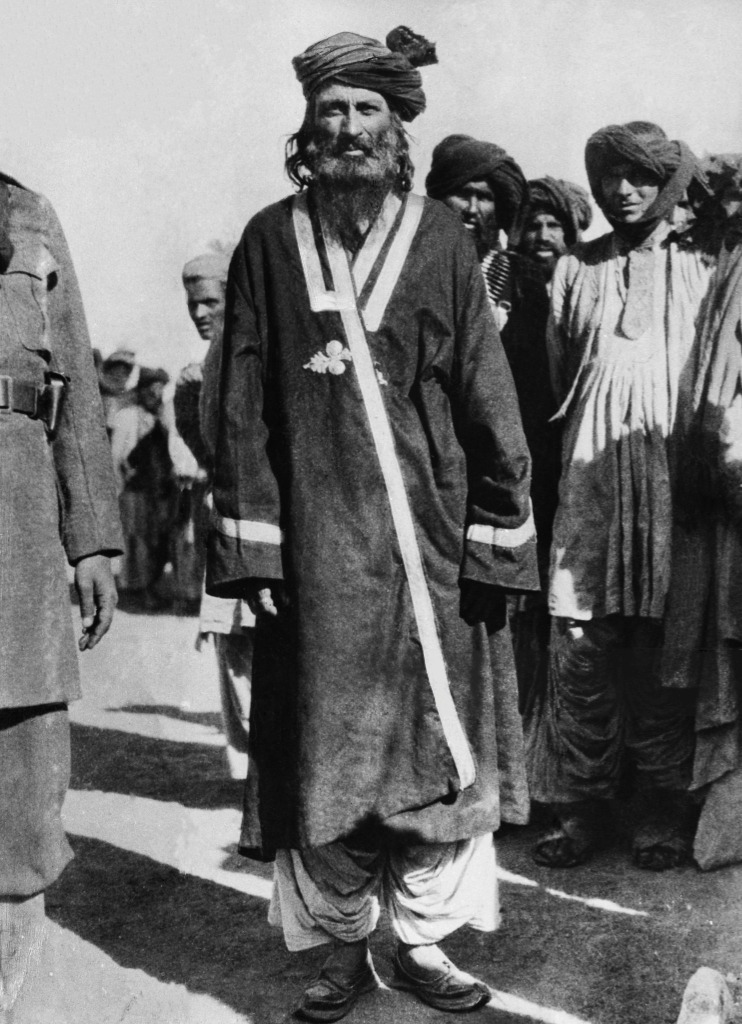
Yet despite this immense garrison, full-scale warfare erupted across Waziristan between 1936 and 1938, ignited by the charismatic Wazir spiritual and military leader Mirza Ali Khan, immortalized as the "Faqir of Ipi." From his mountain sanctuary at Gorwekht, the Faqir waged a relentless guerrilla campaign that tied down more than 30,000 regular British troops and dozens of aircraft, maintaining his defiance through World War II.
In late 1946, on the eve of Indian independence, Jawaharlal Nehru, accompanied by Frontier leader Khan Abdul Ghaffar Khan, flew into Razmak to campaign for integrating the tribal agencies into a united India. The combined Mahsud-Wazir jirga reacted with fierce hostility: tribesmen fired upon Nehru's aircraft as it touched down, disrupted his speech, and bluntly informed him that if they chose to negotiate with any leader, it would be Quaid-e-Azam Muhammad Ali Jinnah of the Muslim League.
Upon the creation of Pakistan in August 1947, Jinnah made the visionary strategic decision to withdraw all regular army garrisons from Razmak and the tribal interior under Operation Curzon. In return, the tribesmen entered into a historic pact: accepting the sovereign umbrella of Pakistan under political agents, while maintaining internal autonomy and providing their own local security through state-salaried Khassadar levies.
When the Faqir of Ipi passed away in 1960, even his former imperial adversaries in London paid tribute to his unwavering conviction, with The Times recording him as "a man of principle and saintliness, the inspiration and general of tribal revolt."
Sources
- 1.Pathans of the Latter Day — James W. Spain, Chapter 7: Waziristan: Less Dark and Bloody
- 2.The Times Obituary, 20 April 1960London Press