
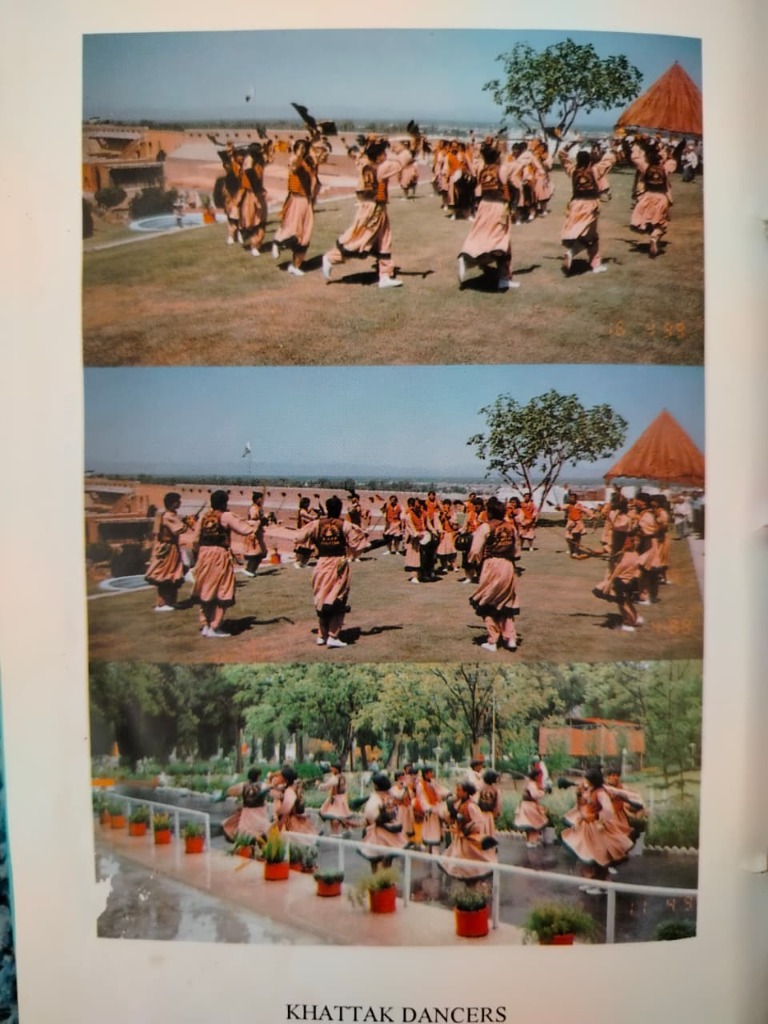
Pashtun folk music holds a distinctive place in the musical traditions of Central and South Asia. Unlike classical Indian ragas with their intricate microtonal structures, the cadence and tempo of Pashtun folk melodies bear a striking similarity to Western melodic scales. This innate acoustic alignment made frontier music remarkably appealing and accessible to foreign observers, travellers, and military officers.
In his observations of the Barak clan among the Khattaks, Buster Goodwin noted that they were renowned as extraordinary vocalists and instrumentalists. Their performances relied on two core instruments: the softly tapped dhol (drum) and the twanging, resonant notes of the rubab—the revered nineteen-stringed national lute of the Pashtuns. Through the rubab, performers recounted the deeds of legendary warriors, celebrated historic outlaws, or articulated intense romantic ballads.
A notable phenomenon on the North-West Frontier was the adaptation of Pashtun melodies by European military bandmasters. During long, arduous route marches across the mountainous passes where full brass bands could not be transported, frontier regiments marched to small detachments of two flageolets and two drums playing adapted local airs. Played in a haunting minor key, these melodies possessed a poignant emotional intensity.
The most celebrated of these marching airs was "Zakme Dil" (The Wounded Heart). Often mistranslated in romantic colonial literature as "The Bleeding Heart," the Pushto term "Zakme" strictly denotes "wounded." The melody became a staple of frontier military bands, leaving an indelible imprint on regimental lore across the Indian Army.
Goodwin also details the structural dynamics of Pashtun vocal performances: a lead singer recites the narrative couplets, punctuated by a dynamic choral refrain ending in the rhythmic chant "wai, wai, wai." Occasionally, dancers within the chorus rise to perform intricate footwork, shaking their bobbed locks in synchronization with the verse, capturing both the martial vigor and lyrical soul of the frontier.
Sources
- 1.Life Among the Pathans (Khattaks) — Buster Goodwin, Chapter VI