All Durranis are Abdalis, but not all Abdalis are Durranis. (This information is compiled in light of historical books like Tarikh-i-Ahmad Shahi, Siraj al-Tawarikh, and Pashtun tribal genealogies)
In Pashtun history, the words Abdali and Durrani are often used interchangeably, which causes misunderstanding. Let us clarify this difference through historical references.
1. Abdali: The original and ancient name of the nation. Abdali is an ancient and large Pashtun tribe historically centered in Kandahar and Herat. This tribe has dozens of branches and clans. In short, Abdali is a nation, while Durrani is a political title for one of its branches.
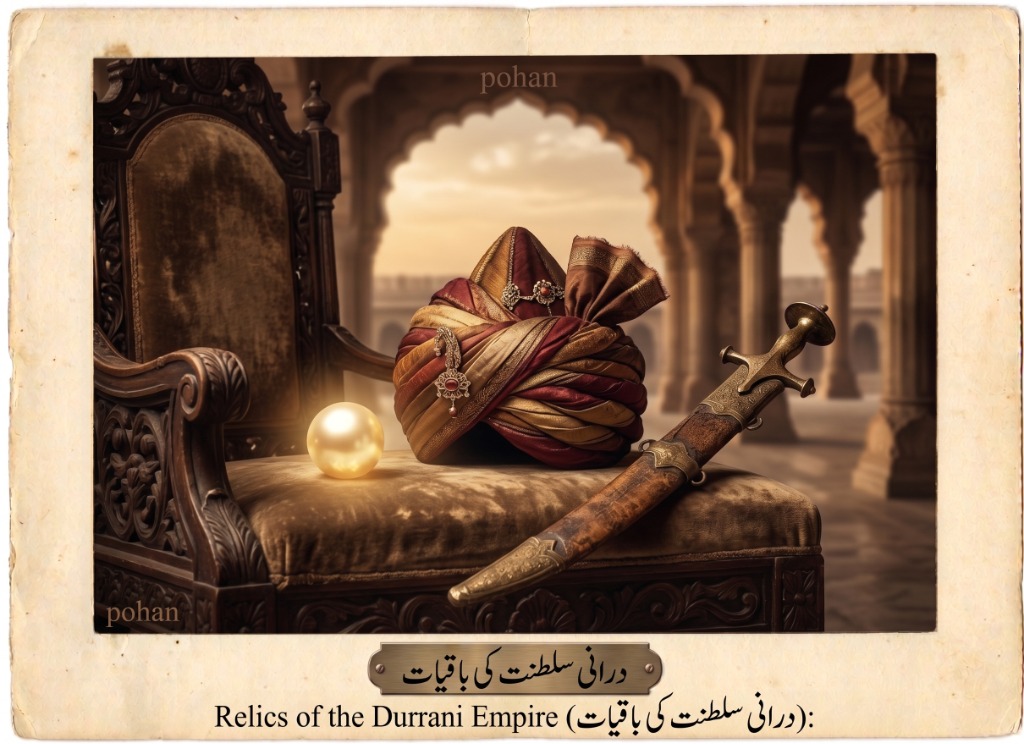
2. How and to whom was the title of Durrani given? After his coronation in 1747, Ahmad Shah Abdali was given the title of Dur-e-Dauran (Pearl of the Age). From this, the word Durrani was derived.
However, this title was not limited to Ahmad Shah alone. When he became king, his ruling branches, the Sadozai and Popalzai, also began to be called Durrani because the state and government belonged to their family.
Later, in 1826, when the Barakzai branch took over the government, they also maintained the Durrani affiliation because they were also Abdalis and carried the Durrani state forward.
3. The title of Durrani is not an ethnic affiliation, but rather a political and familial one.
4. Durranis are exclusively those Abdalis who belong to the Sadozai, Popalzai, and Barakzai ruling families. These three branches ruled Afghanistan from 1747 to 1978.
All other branches of the Abdalis are also honorable Abdalis, but because they were never historically rulers, they are not called Durrani. They are known by their original name, Abdali. For example, Quraysh is a large tribe, but Hashimi is only used for Banu Hashim. Similarly, Abdali is a large nation, and Durrani is the title of its ruling families.
Sources
- 1. — Mahmud al-Husayni al-Munshi
- 2. — Faiz Muhammad Katib Hazara